Adapt Project
A student-run nonprofit · Philadelphia

We build assistive devices, then give them away.

We’re a team of Philadelphia high school students. We 3D-print adapted toys, switches, and everyday tools, then donate them in batches to the care centers that need them. Every design is open source, and nothing we make costs the recipient a cent.

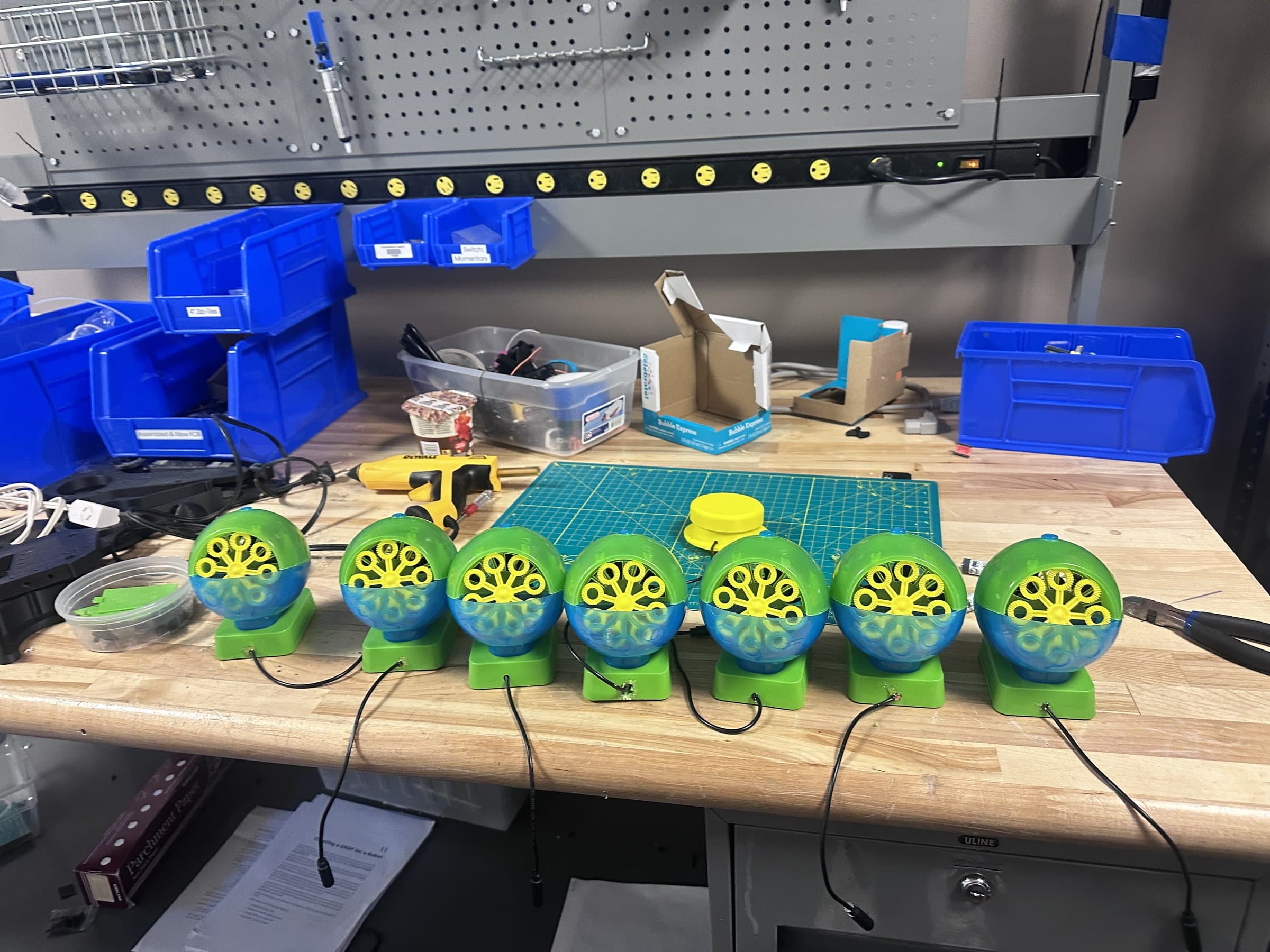
Seven switch-adapted bubble machines lined up on a workbench, each with a 3.5mm jack cable soldered in.
Switch-adapted bubble machines, tested and boxed
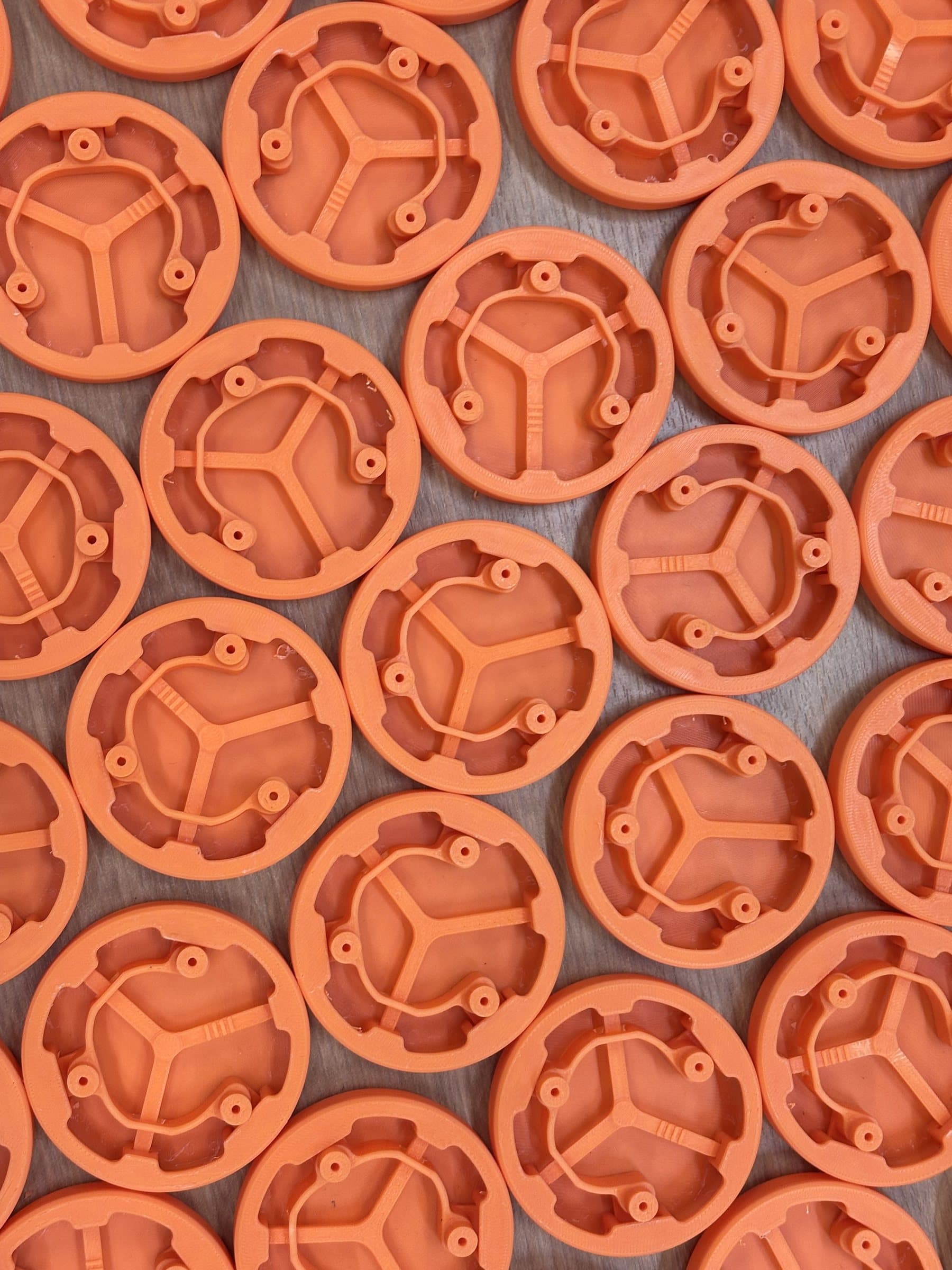
Dozens of orange 3D-printed switch button frames arranged edge to edge on a wood table.
Switch buttons, fresh off the printer
01The problem
240M
children worldwide live with a disability, per UNICEF's 2021 global estimate
$70+
cost of a single commercial assistive switch
Weeks
wait time for commercial devices

Commercial assistive devices are expensive, slow to arrive, and rarely fit the person using them. 3D printing solves the cost problem, but somebody still has to design the parts, print them, and get them into the hands of the centers that need them. That's the part we do.

02What we donate

Built in batches, for the centers that hand them out.

Adapted Toys

×21 donated

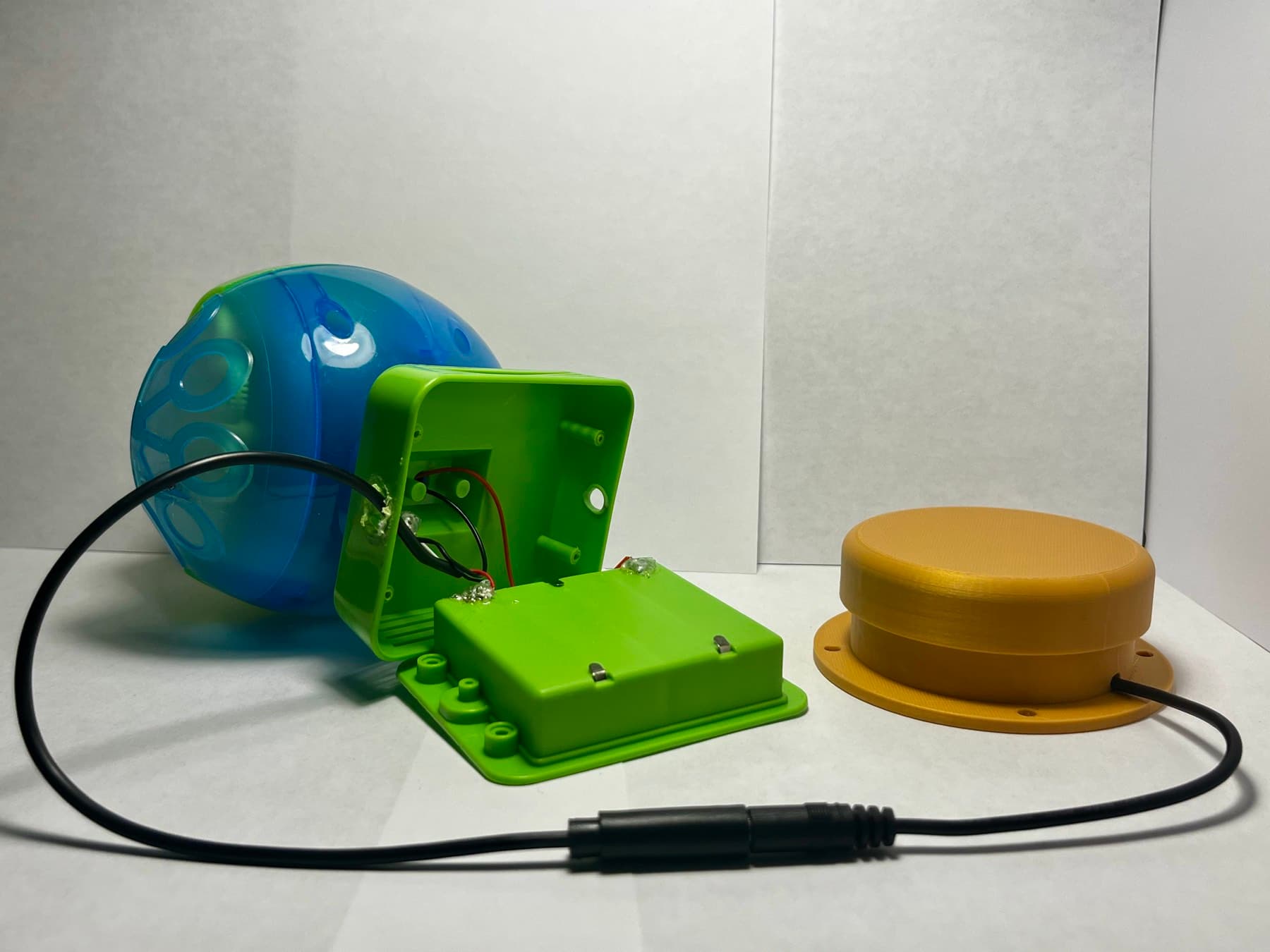
Many battery-powered toys demand more fine motor control than some children have. We rewire them for standard 3.5mm assistive switches and print large, easy-press buttons, so the toy responds to whatever movement a child can make.

Switch-adapted · Built in batches for care centers
Everyday Tools

×376 donated

Utensil holders, zipper pulls, key turners, jar openers. Small printed tools that make daily routines manageable for people with limited grip or reach. By count, most of what we donate is in this category.

All ages · Non-medical · Printed by the dozen

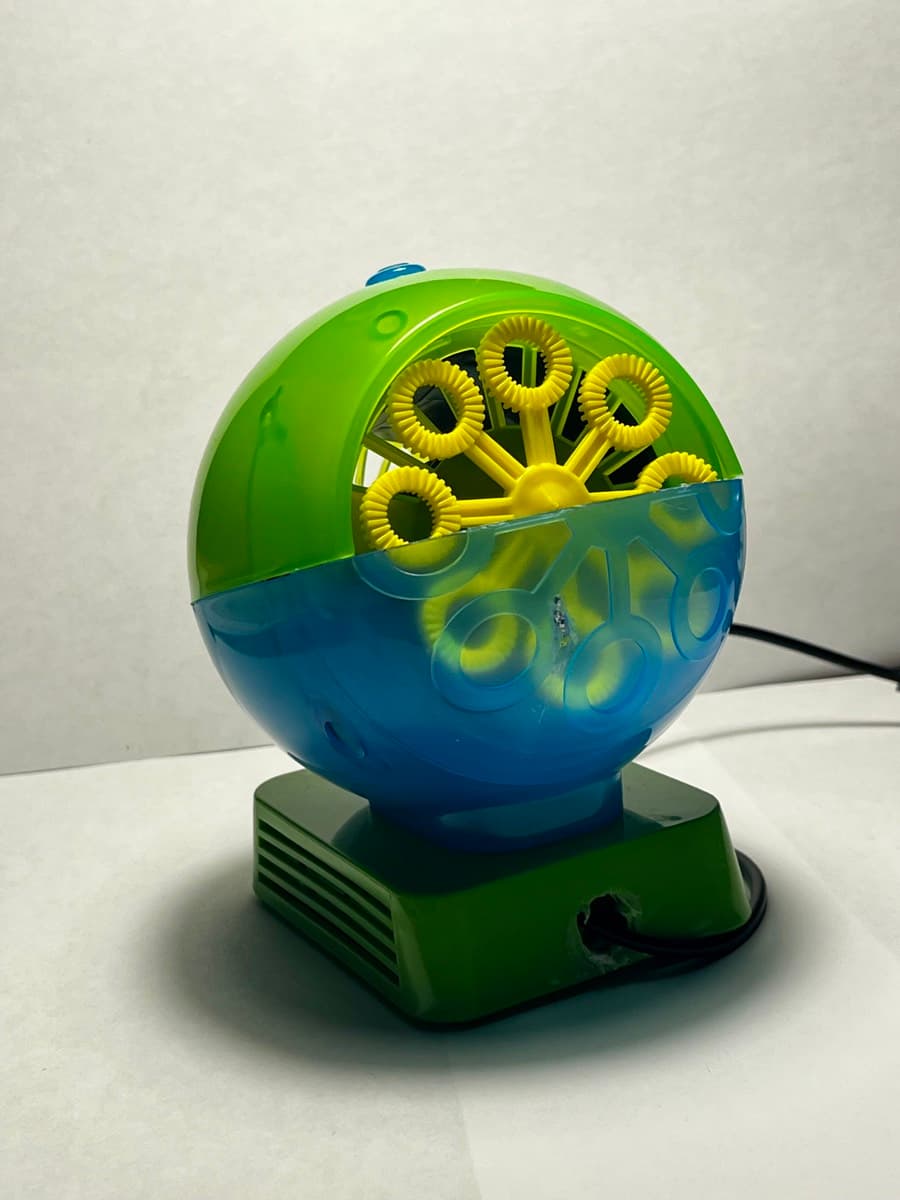
A finished switch-adapted bubble machine printed in green and translucent blue.
Fig. 02Finished unit, ready for donation
How a switch goes together
01

Four printed parts

A cap, a retaining ring, a base, and one off-the-shelf limit switch. Nothing exotic — that's the point.

04The process

Four steps from a need to a delivery.

If your center has a specific need, the whole process starts with an email to adaptprojectphilly@gmail.com. Your staff stays focused on patients; we handle design, fabrication, and delivery.

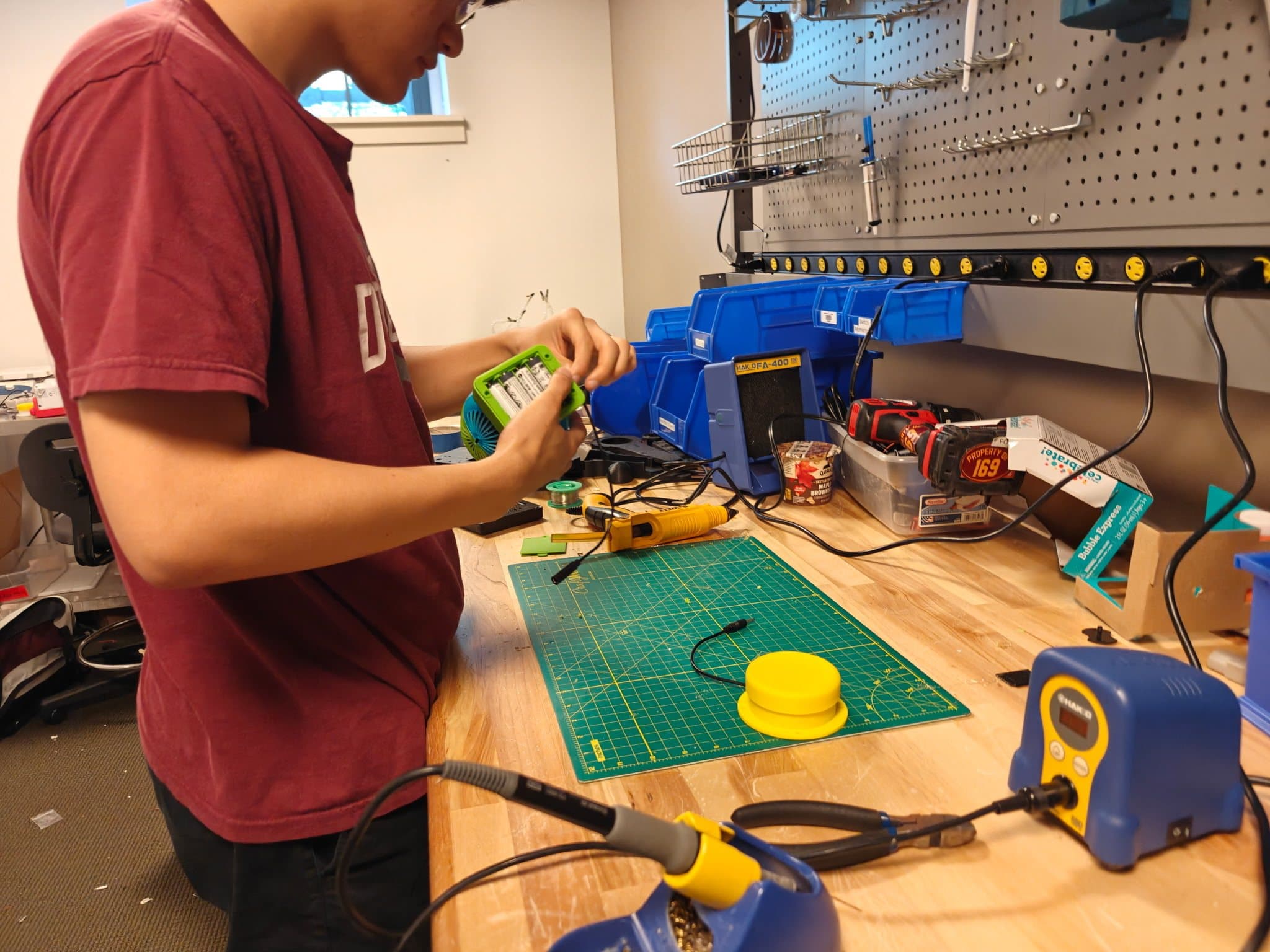
A student at a makerspace workbench wiring the battery compartment of a green bubble machine, with a yellow assistive switch on the cutting mat beside them.
Fig. 05Wiring a bubble machine for switch access
  1. 01

    A center reaches out

    Most projects start with an email. A care center, clinic, or school tells us what their patients or students keep running into, and what would help.

  2. 02

    We talk it through

    Write to us and describe the need in plain terms. We'll work out quantities and details together over email.

  3. 03

    Design and print

    We start from proven open-source designs and modify them in Onshape CAD when something doesn't fit. Printing happens in batches, with capacity from our partner university makerspaces.

  4. 04

    Donate and publish

    Finished devices are assembled, tested, and delivered at no cost. Any design we changed along the way goes back online under Creative Commons.

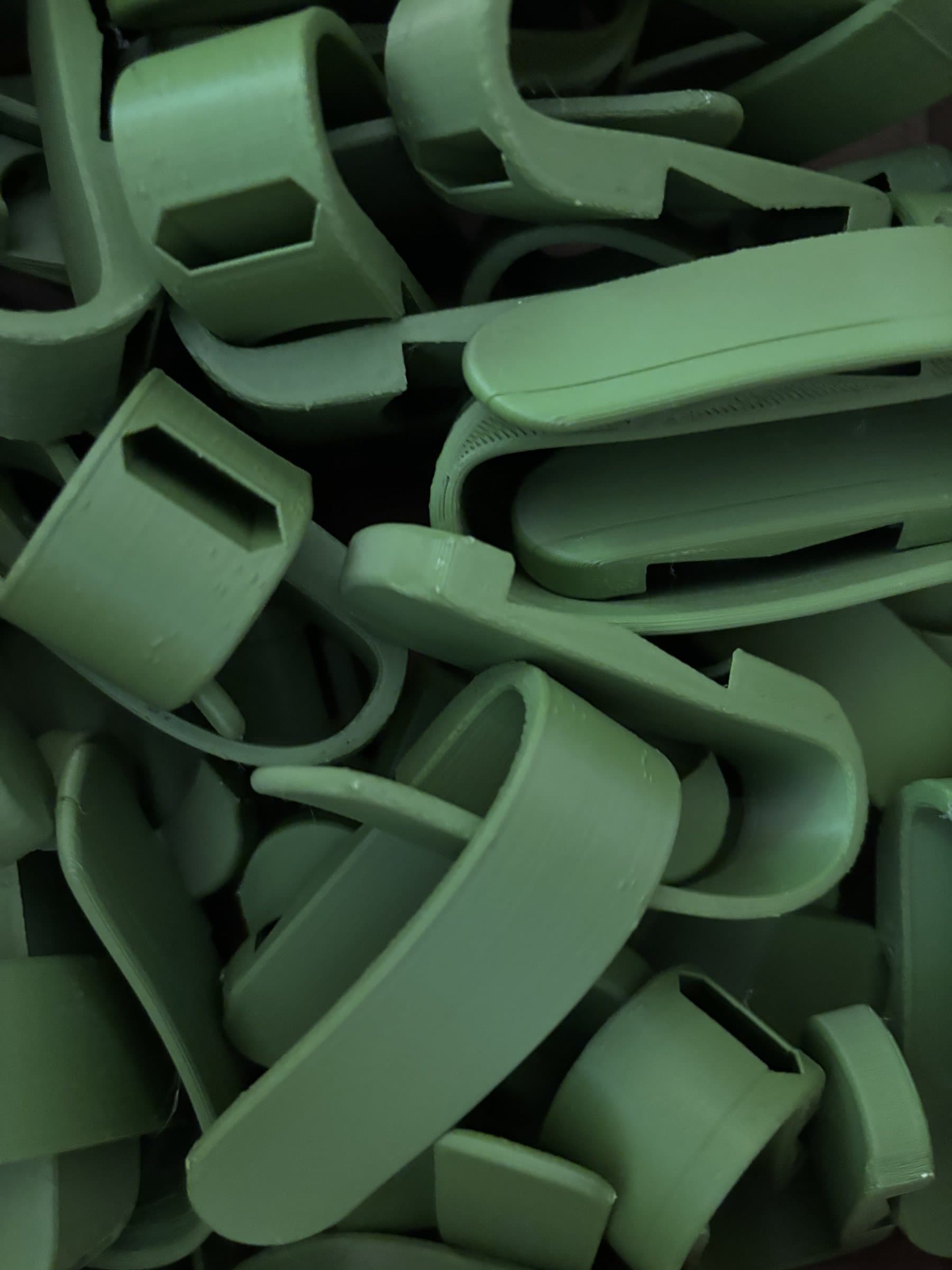
A bin filled with green 3D-printed universal cuffs, which hold forks, spoons, and other utensils for people with limited grip.
Universal cuffs · ×41
05Donation record
Our first donation
397
assistive devices, adapted toys, and printed tools in a single delivery. Cost to the recipient: $0.
Received by
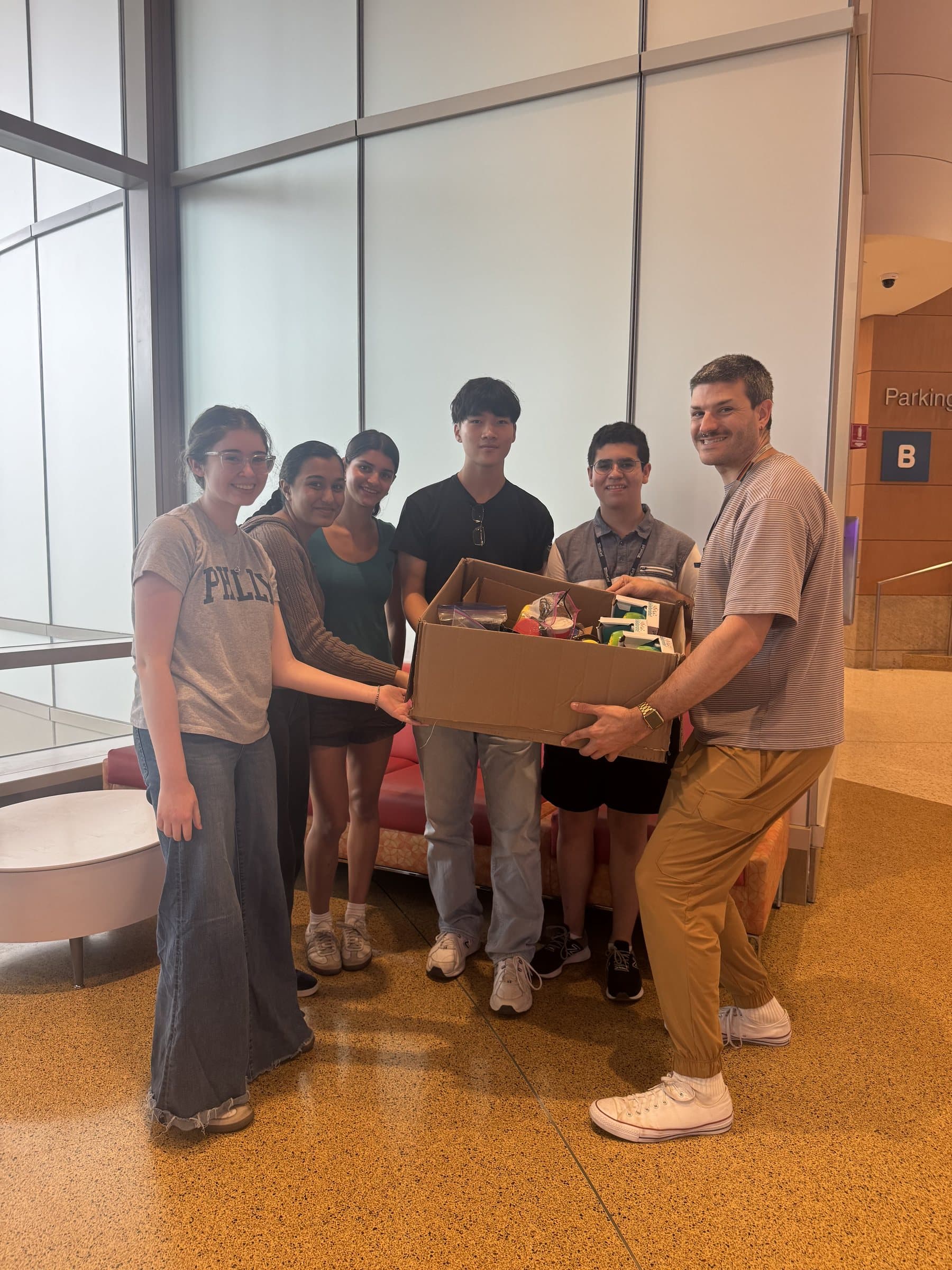
Daniel Fichter, DOT, OTR/L
  • Occupational therapist at the Buerger Center for Advanced Pediatric Care in Philadelphia
  • Works with children in the hospital's feeding and swallowing programs
  • Doctor of Occupational Therapy, University of the Sciences
Packing manifestNo. 001
Items included in donation 001
Zipper pulls
9 colors
×335
Universal cuffs
40 green, 1 yellow
×41
3D-printed switch buttons
multiple colors
×10
Switch-adapted bubble machines
1 button each
×8
Adapted camera toys
original buttons still work
×3
Total×397
Five Adapt Project students and Daniel Fichter holding a cardboard box packed with adapted toys and printed devices in a hospital lobby.
Fig. 06Handing off donation 001
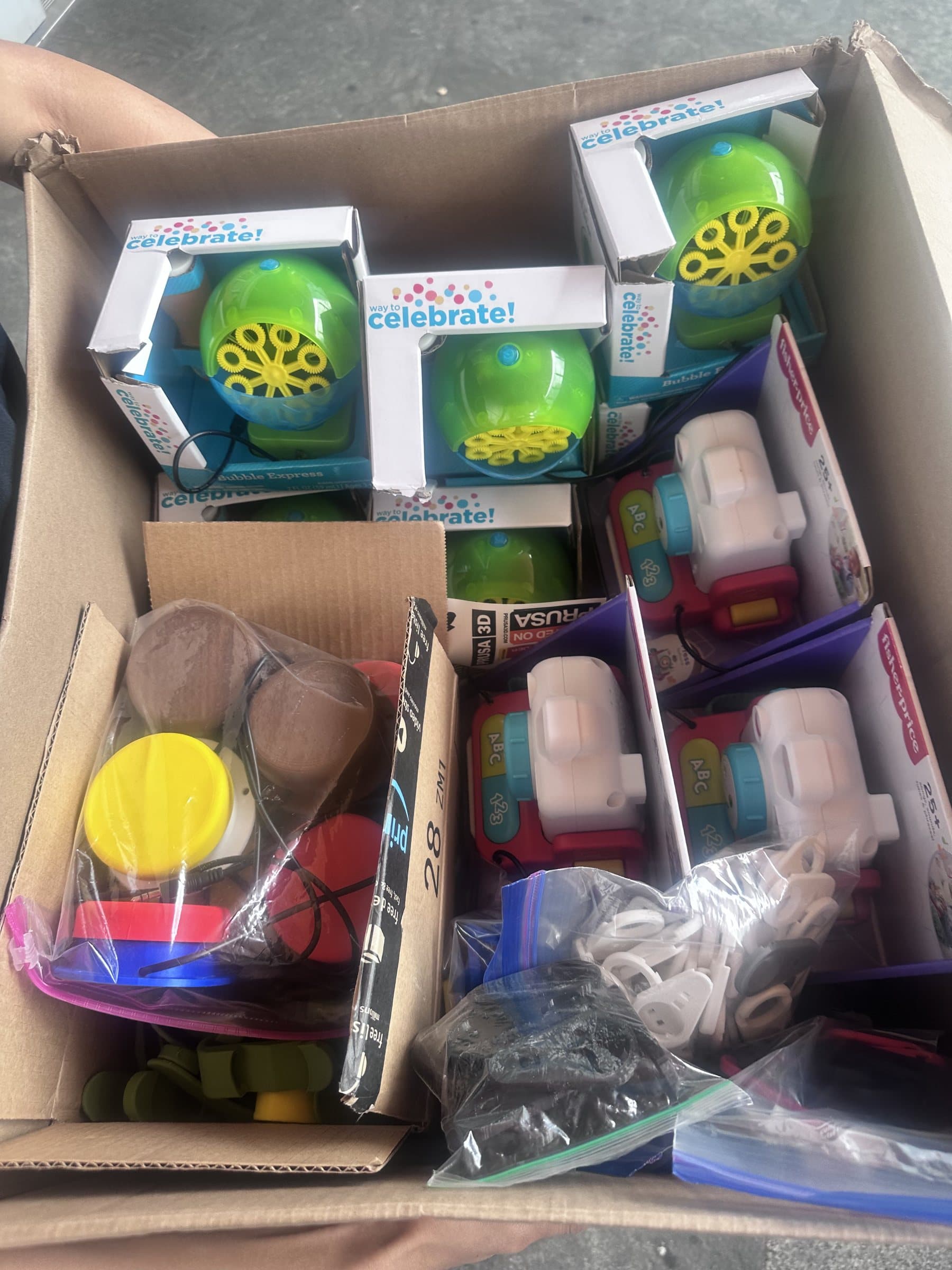
A cardboard box packed with boxed bubble machines, Fisher-Price camera toys, and bags of 3D-printed switch buttons and zipper pulls.
Fig. 07The box, packed: 397 devices

This was a personal donation to Daniel Fichter for use in his own practice. It is not a partnership with, or an endorsement by, Children's Hospital of Philadelphia.

07Team

Built by students.

Eight students from seven schools across the Philadelphia area. Between us: CAD, soldering, print farming, and a lot of patience with failed first layers.

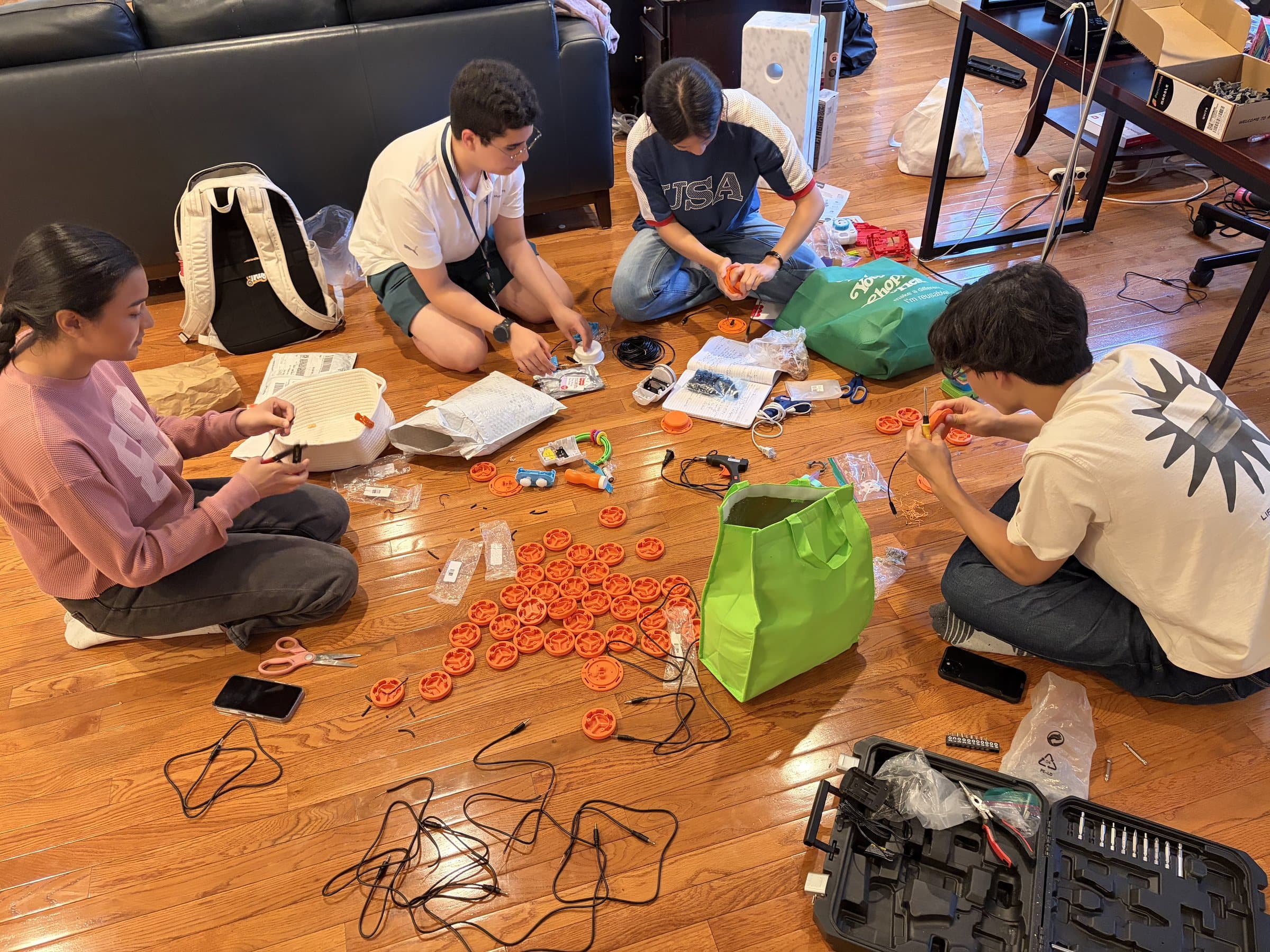
Four team members sitting on a living room floor assembling orange switch buttons, surrounded by cables, tools, and open notebooks.
Fig. 08Assembly night: switch buttons for donation 001
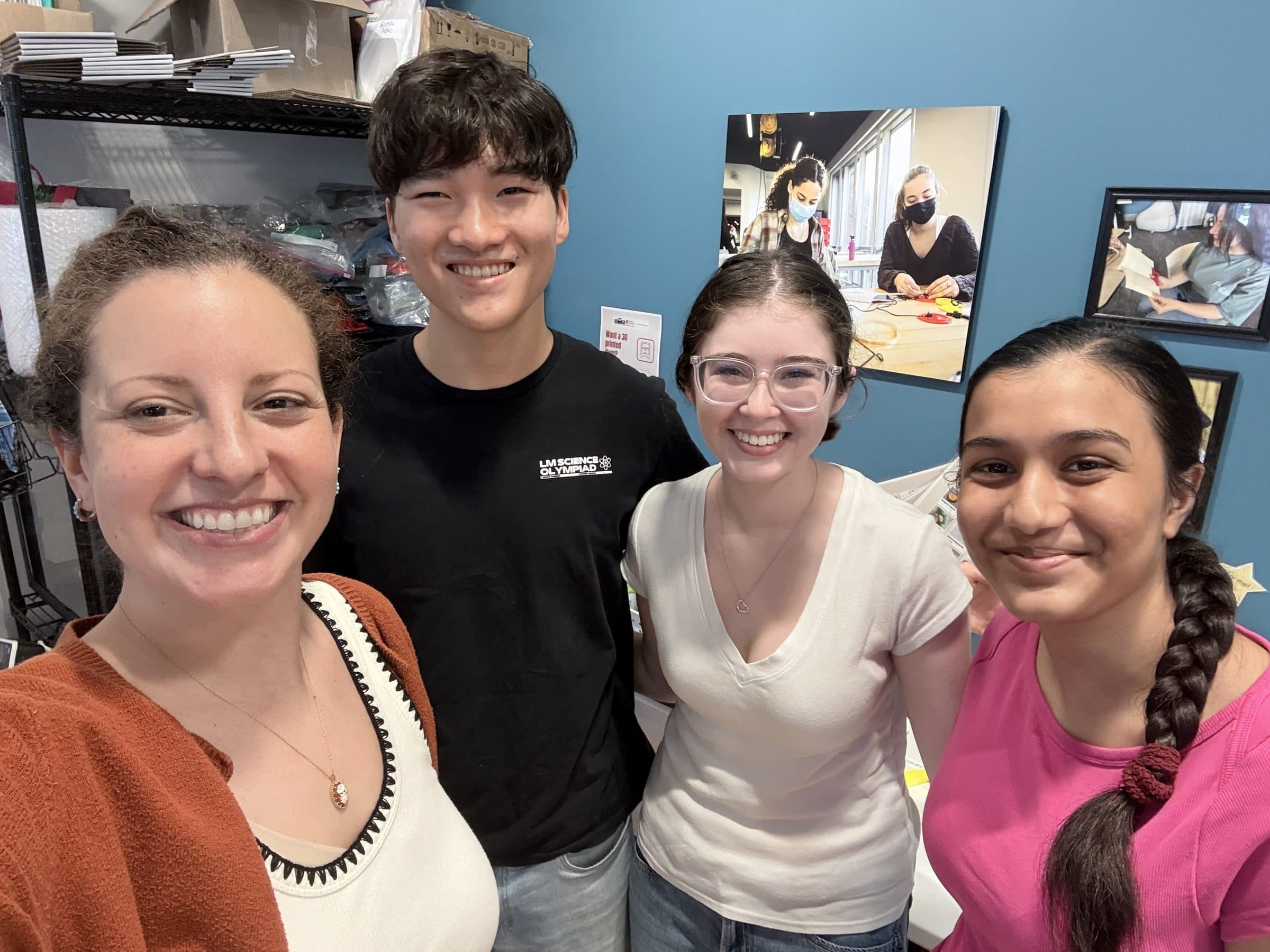
Three Adapt Project members and a staff member standing together and smiling at TechOWL, in a room lined with shelves of assistive devices and printing supplies.
Fig. 09At TechOWL, Pennsylvania's assistive technology program
  • Alexa Bernstein
    Harriton High School
  • Ebiel Febres
    Haverford High School
  • Tvisha Jani
    Conestoga High School
  • Simon Joeng
    Lower Merion High School
  • Lingxi Kong
    The Baldwin School
  • Max Leung
    Episcopal Academy
  • Sophia Plastaras
    Julia R. Masterman
  • Aria Zadeh
    Lower Merion High School
08Open source

Everything we build belongs to everyone.

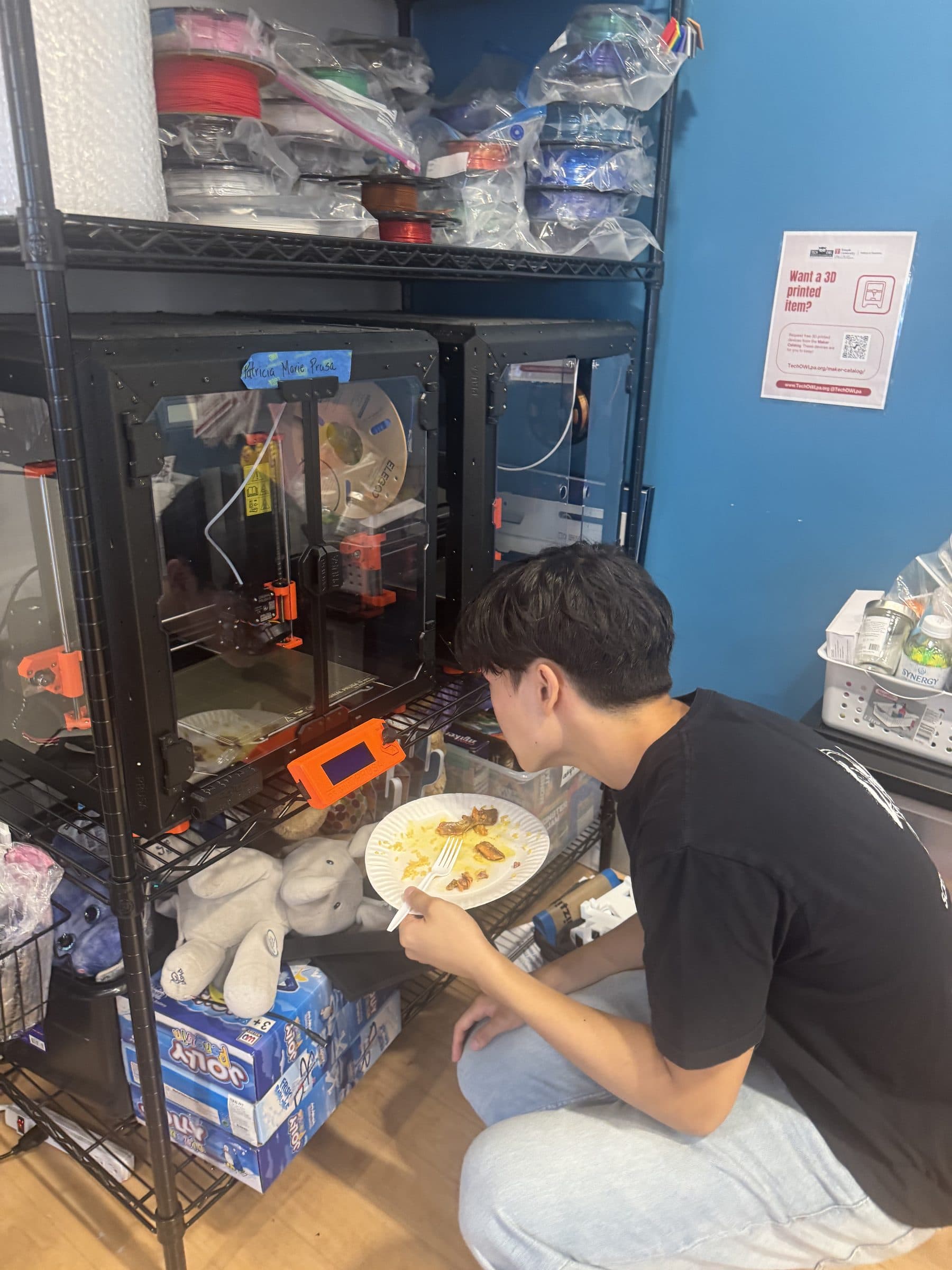
An Adapt Project member crouched beside a bank of 3D printers at TechOWL, watching a print run, with bagged filament spools stacked on the shelf above.
Fig. 10Watching a print run at TechOWL's lab

Every file we create is published openly: CAD models, print settings, and assembly notes, all under Creative Commons on Thingiverse and Printables.

That means a makerspace in rural Pennsylvania or a hospital on another continent can reproduce our work for the cost of a spool of filament. A device we adapt for one center can end up helping thousands of people we’ll never meet.

09Contact

Tell us what your center needs.

We donate to and partner with care centers, clinics, and schools around Philadelphia. If your center has a specific need, whether that’s a dozen switch-adapted toys or a few hundred zipper pulls, this is where it starts.

  • We reply within 48 hours.
  • No cost to recipients or partner organizations.
  • A plain description of the need is all it takes.

We’ll never share your information.